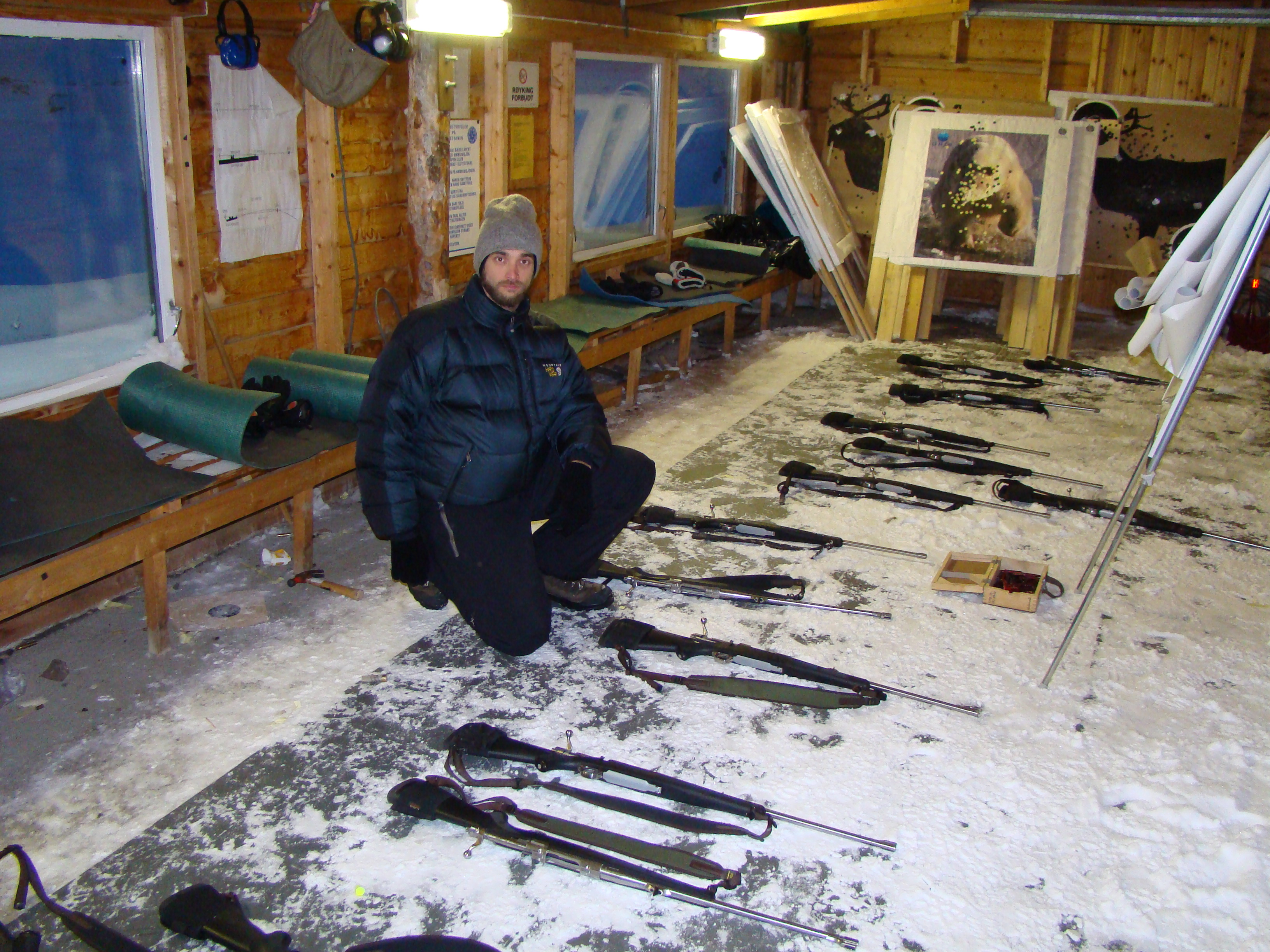
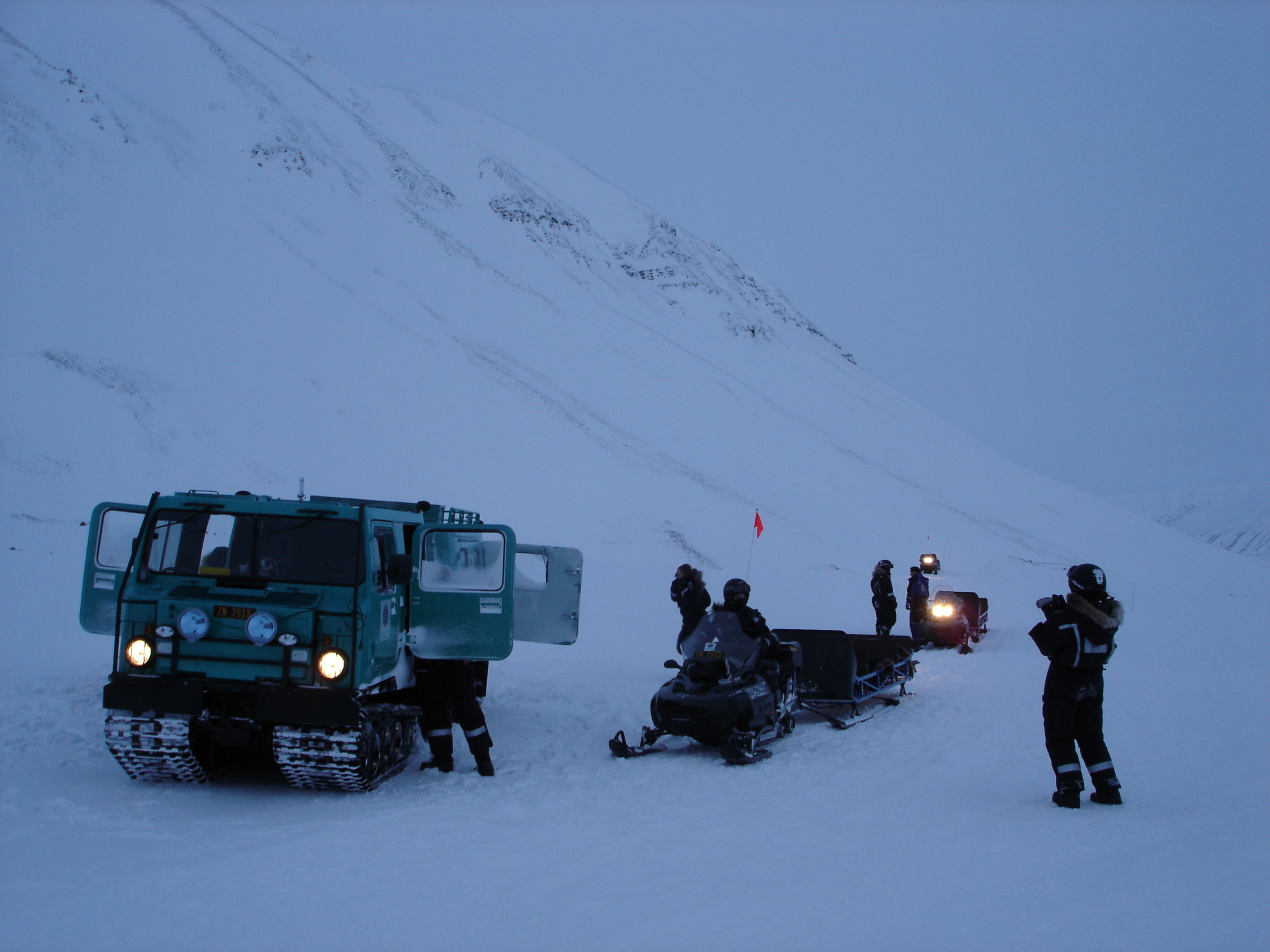
Up here, scooters (snowmobiles) are a very important part of life. They are one of the main modes of transportation, and not surprisingly, outnumber all the people in town. From very early in morning to late at night, one can hear them roaring around, and the smell of 2-cycle engines abounds. You can buy them here ($20000), rent them at the scooter shop by the week on guided tours ($4000), or ride them for free roughly once a week during field work expeditions (weather permitting) as a student at UNIS. But before you ride as a UNIS student, you must be trained first.
We met early this morning and broke into two groups. This time I was in the theory section first.
Fred once again discussed safety issues with traveling in the Arctic and the
areas that are off limits to scooters
(there are huge chunks of Svalbard managed as wilderness and national parks). Fred emphasized that scooter use is the most dangerous aspect of field work here by far, and that they are prone to breakdowns because of the cold temperatures, so we discussed at length the troubleshooting and repair of scooters. For example, one problem that commonly happens is a broken drive belt. He showed us how to replace it and asked each of us to take the belt off, and put it on. Even though I've not done it before, it was easy for me, because I've replaced a lot of belts on variable speed pulleys at the farm on our combines and swathers. And the "dump a little gas in the sparkplug if your engine is not starting trick" also rang bells because I've done that one before too. Its interesting how all that farm and ranch experience is coming in handy up here. I couldn't help wondering how easy it would be during a blizzard at -25˚C though...
Alas, our group's chance to get outside for the first time and ride the scooters came. I was really excited. After gathering all the proper scooter gear which included heavy boots, suits, liner gloves and mittens, helmuts, balaklavas, and goggles, everyone strapped a transceiver to their bodies. This is a tool to actively track people if a safety issue arises or if you can't make it home as planned (like if you get lost, are stalled by a giant blizzard, fall into a crevasse on the glacier, or if you get eaten by an isbjorn). The last thing we did was sign our names and info onto the excursion safety sheets (protocol before every outing) so that if something did go wrong they determine who was missing and could contact relatives quickly if necessary.
Once fully dressed so no bare skin was exposed anywhere, we went outside, started up the scooters, and waited for the sign to proceed.
Jørgen Haagensil, a friendly and highly experienced member of the logistics team, led the scooter group out into the field.
John Karlsen, another fun member of the logistics team, followed the group into the field.
Lucky for me, I found myself first in line behind Jorgen as we ventured away from the new and lavish logistics facility at UNIS into the Arctic wilderness. The views were incredible. We cruised across Adventdalen, the wide valley that is seen to the northeast of Longyearbyen. As we crossed the valley, the mountains in front of us grew larger and larger, and and the darkness over the fjord became much more pronounced. I couldn't believe my eyes.
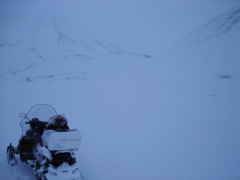
We stopped a couple times to let the long line of scooters catch up so the group could get together. Jorgen and John showed us how to both get a scooter stuck and how to get one free or dig it out–something we'll no doubt have to deal with. I've heard from several people who have lived here for a long time that the large amount of snow Svalbard is receiving this year (a likely a sign of climate change?) is highly unusual–and that makes scooter use more difficult. In fact, the fjord in front of Longyearbyen, " Isfjorden" (Ice fjord) its completely free of ice this year. People commonly cross the ice in places to access areas all over Svalbard, but cannot in many places this year, making travel in some cases much longer and much more challenging.
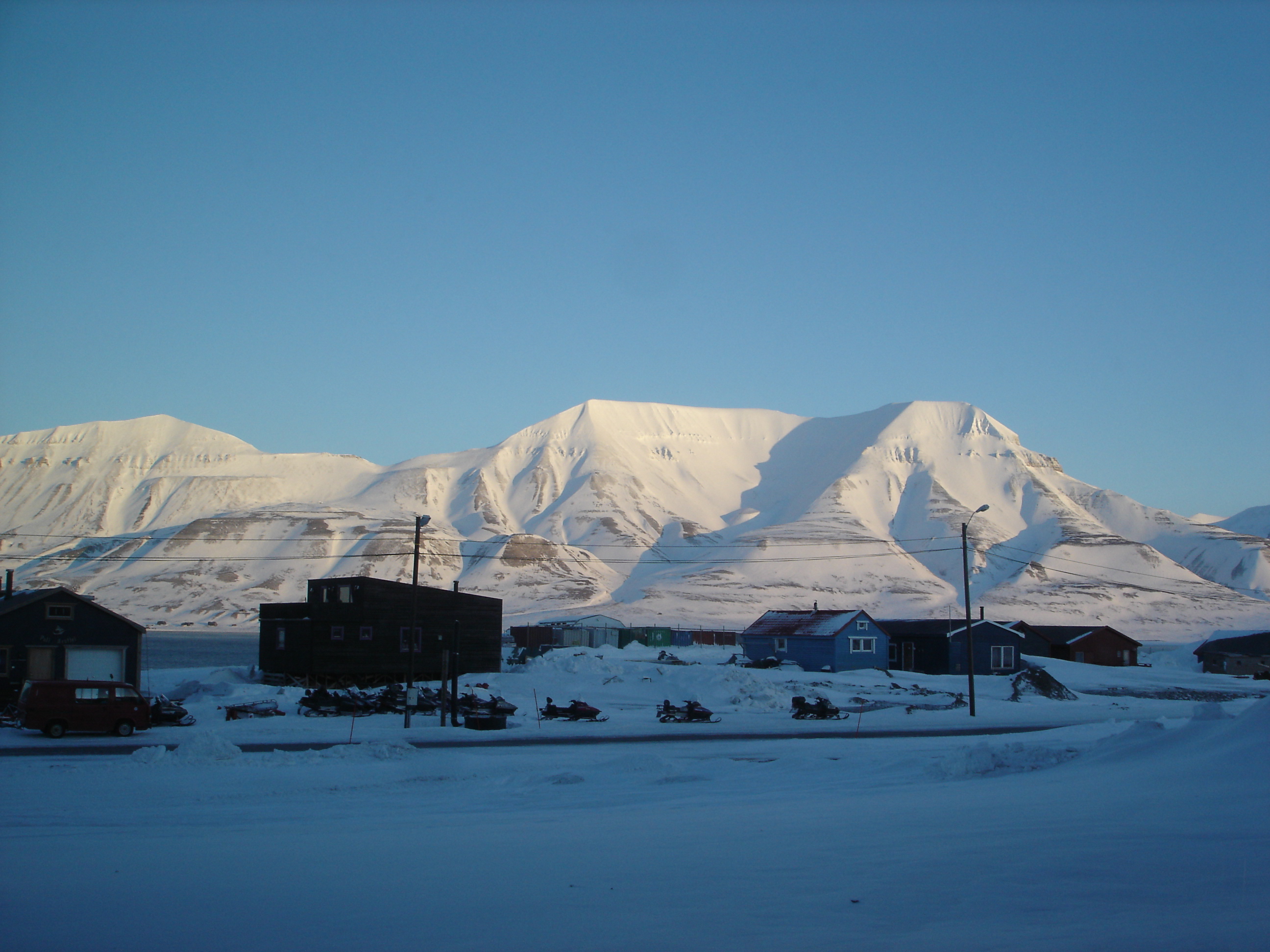

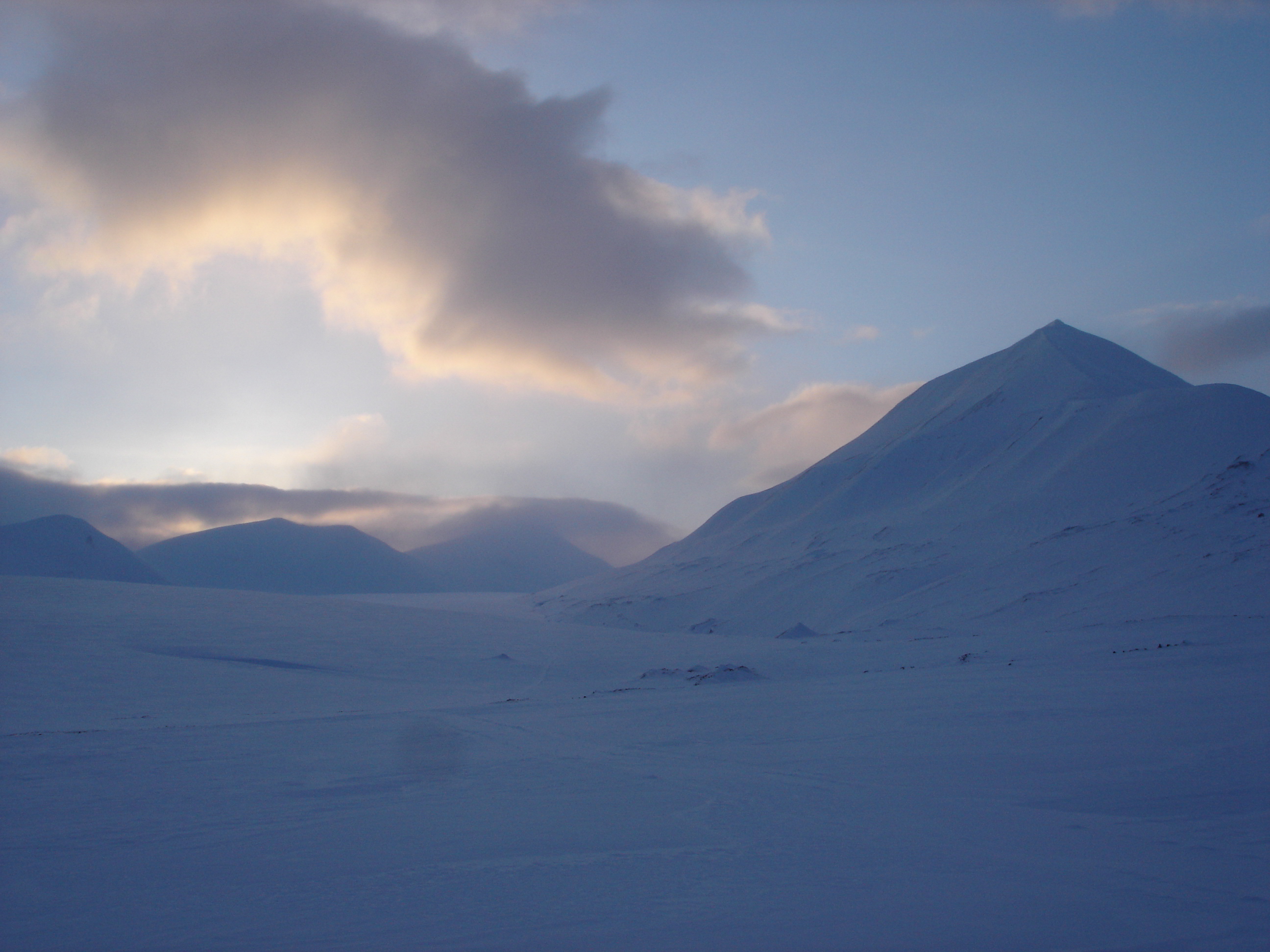
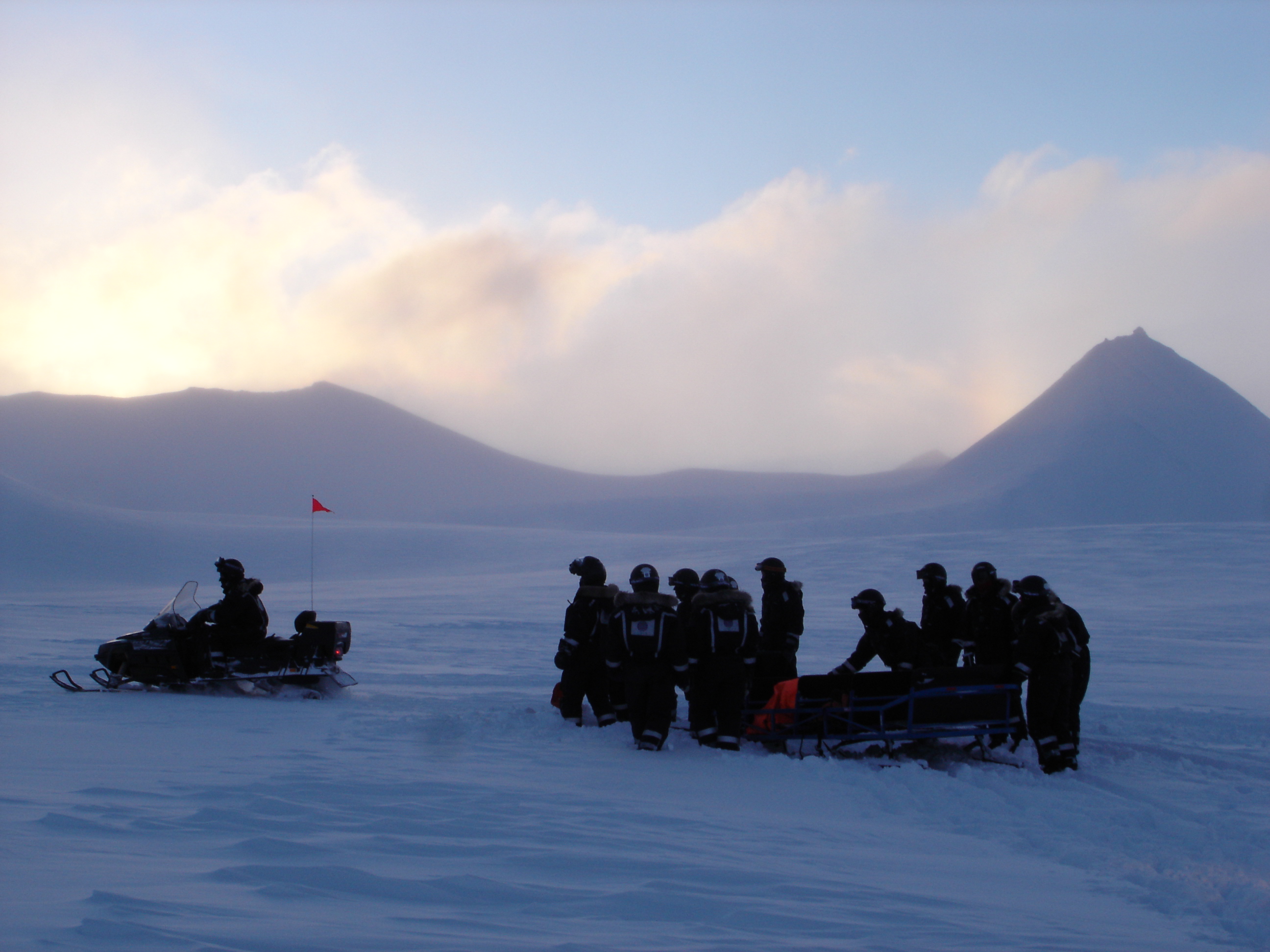
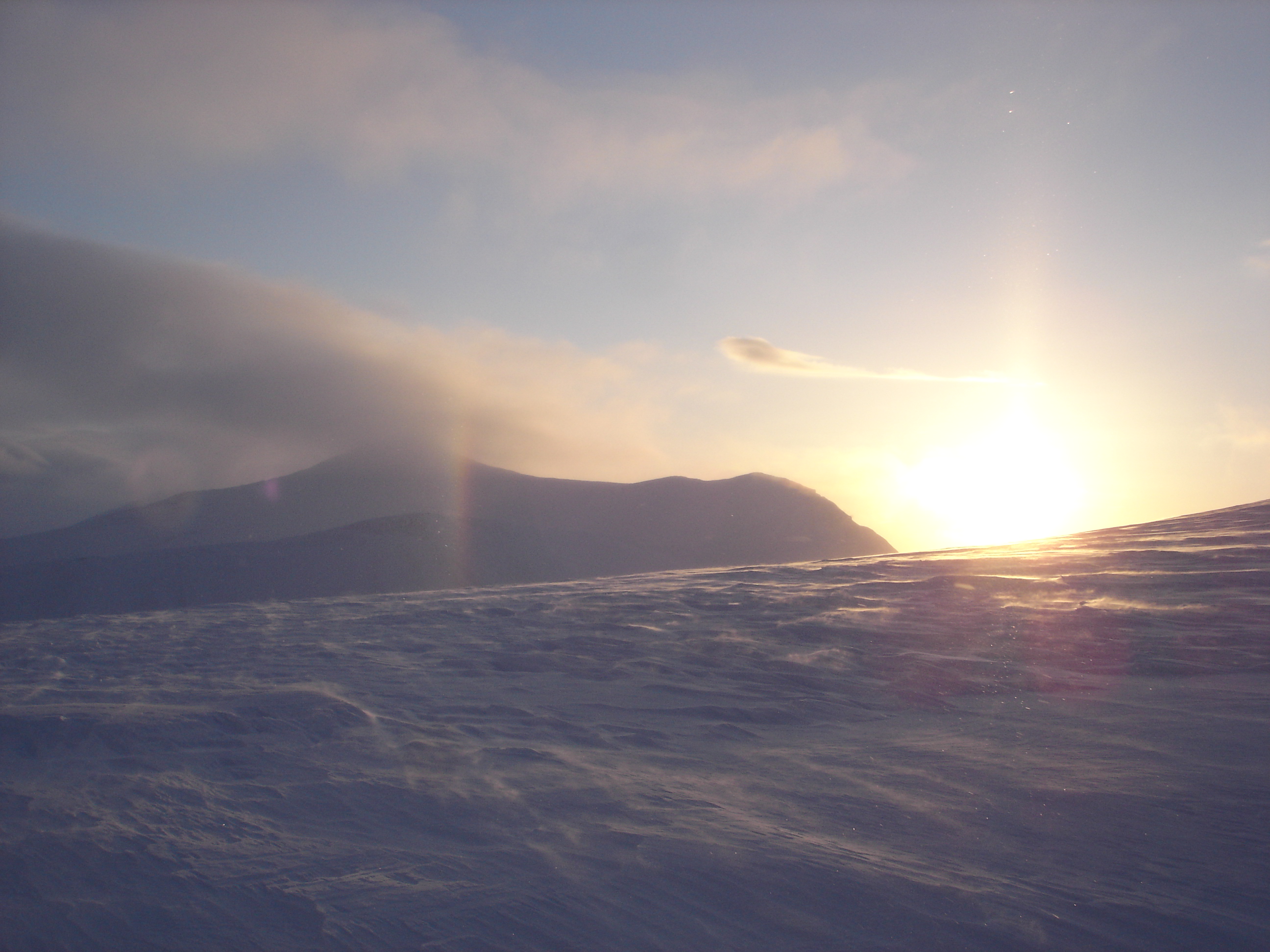
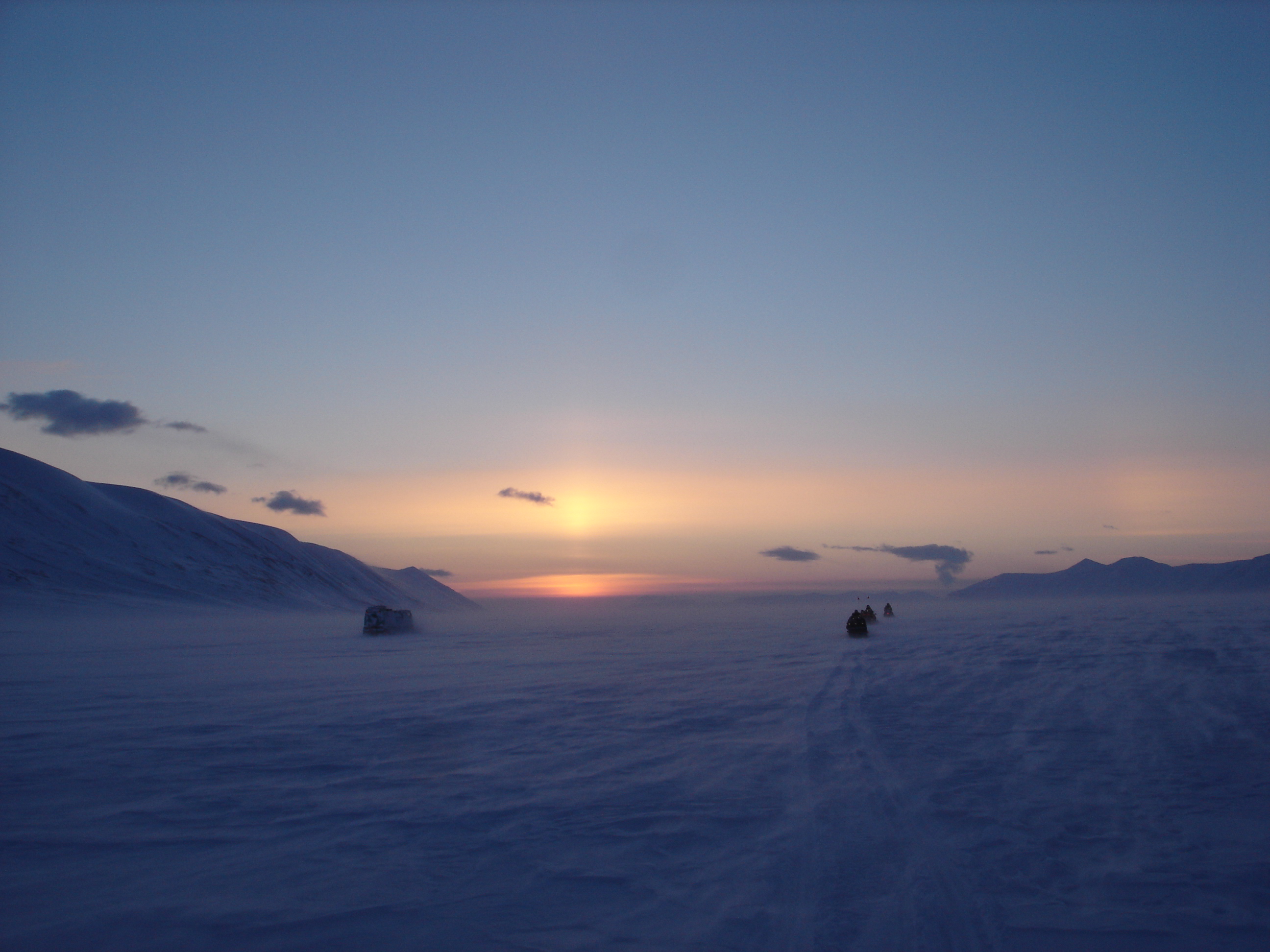
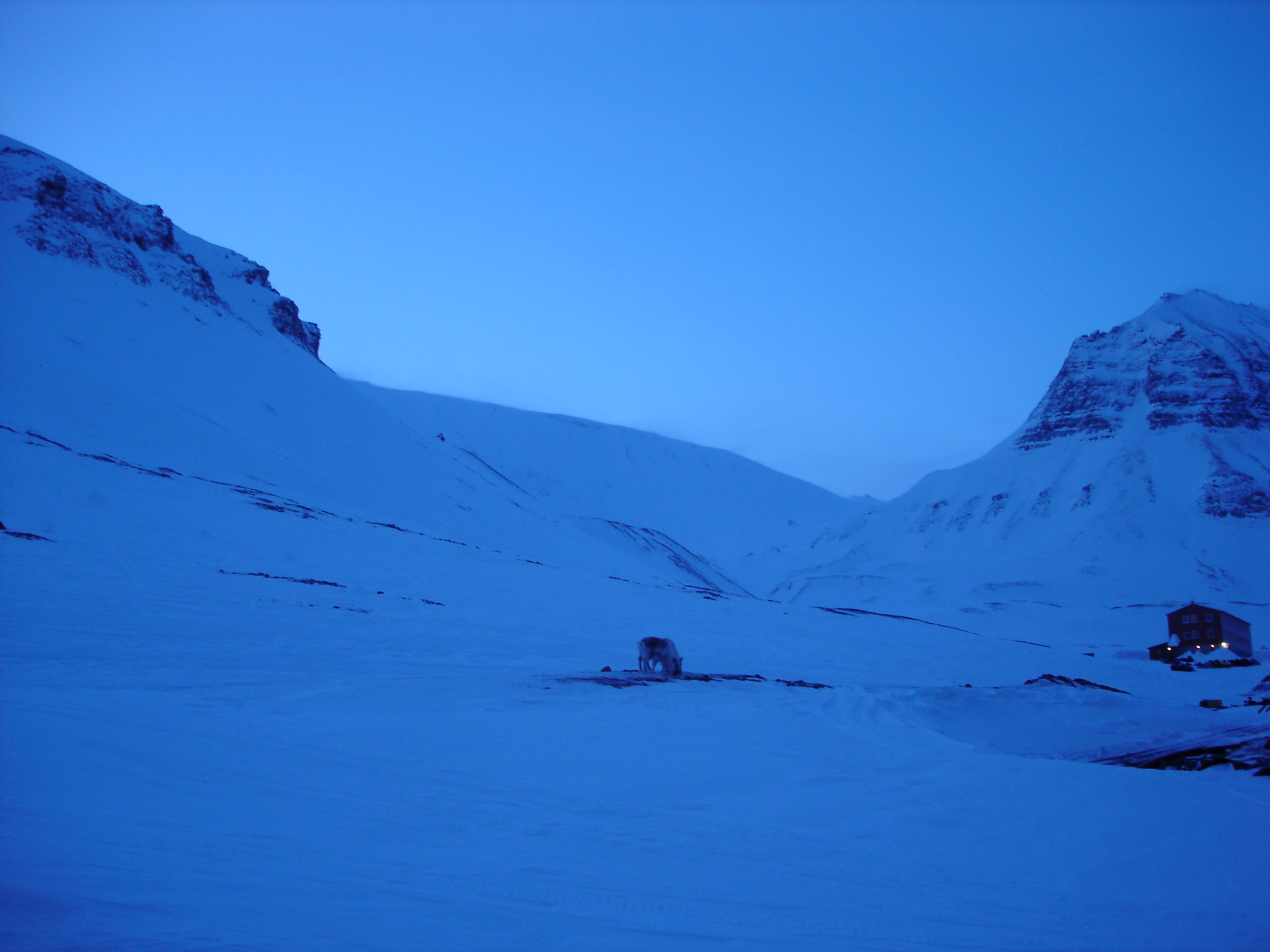
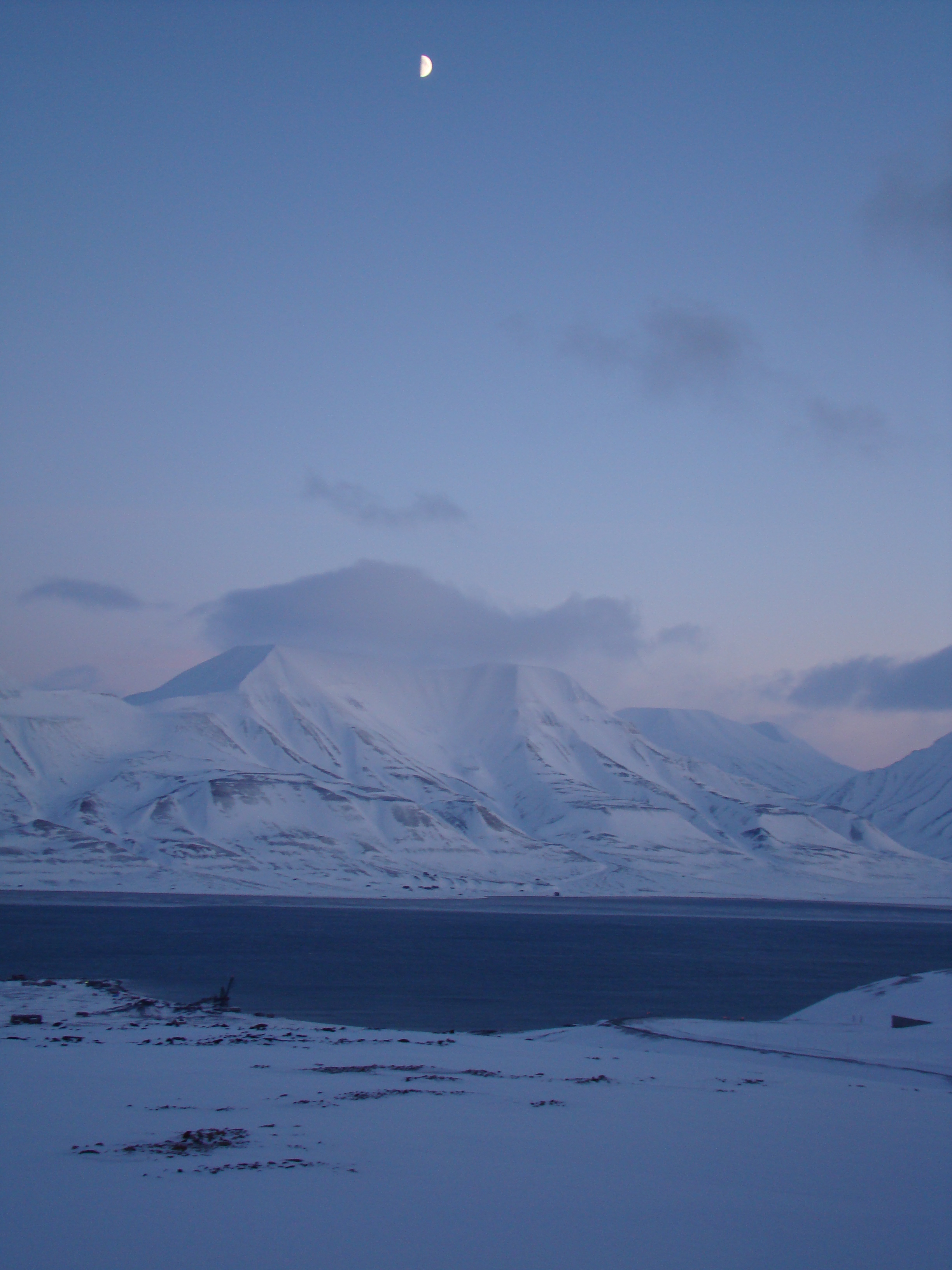
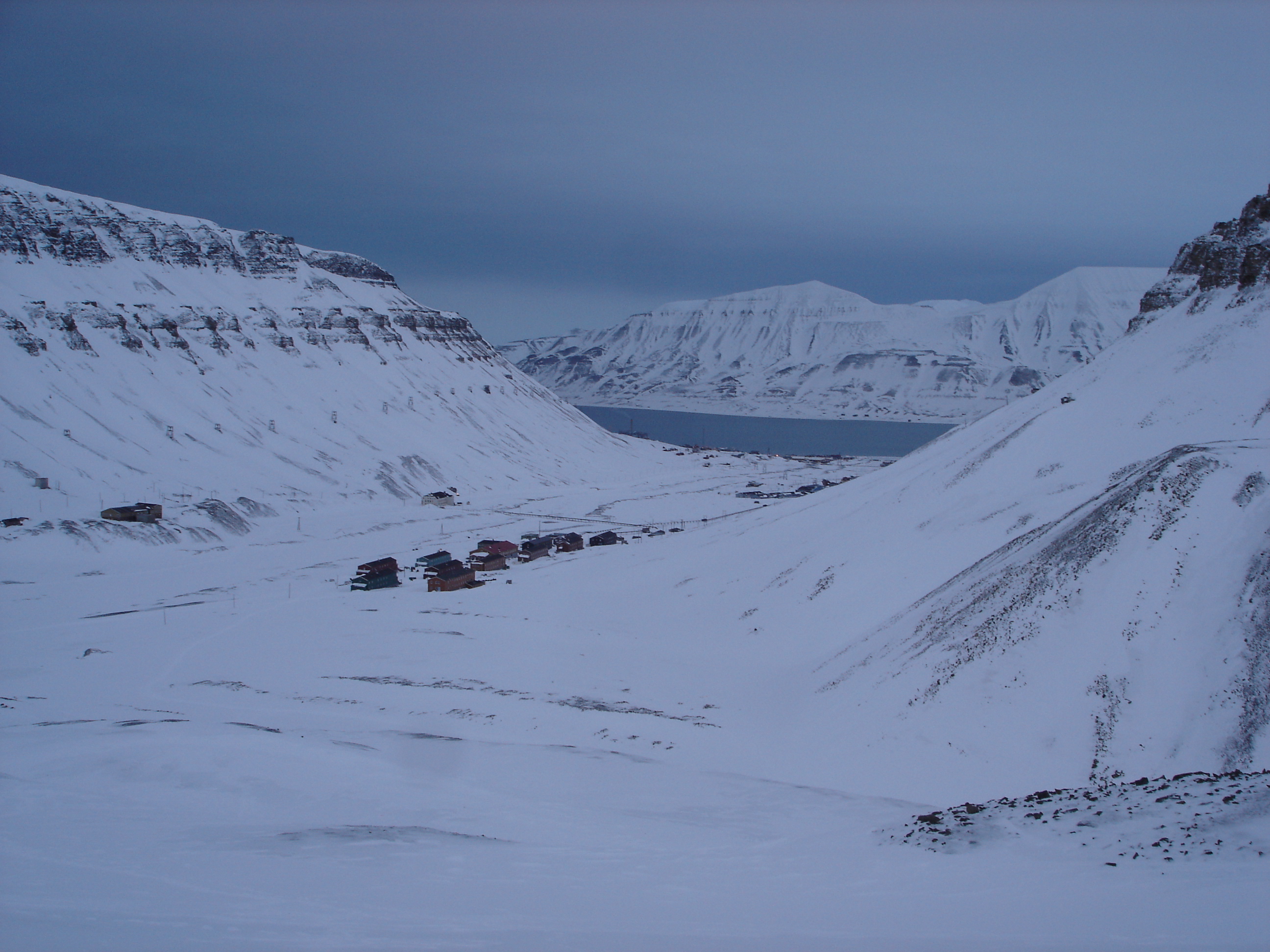





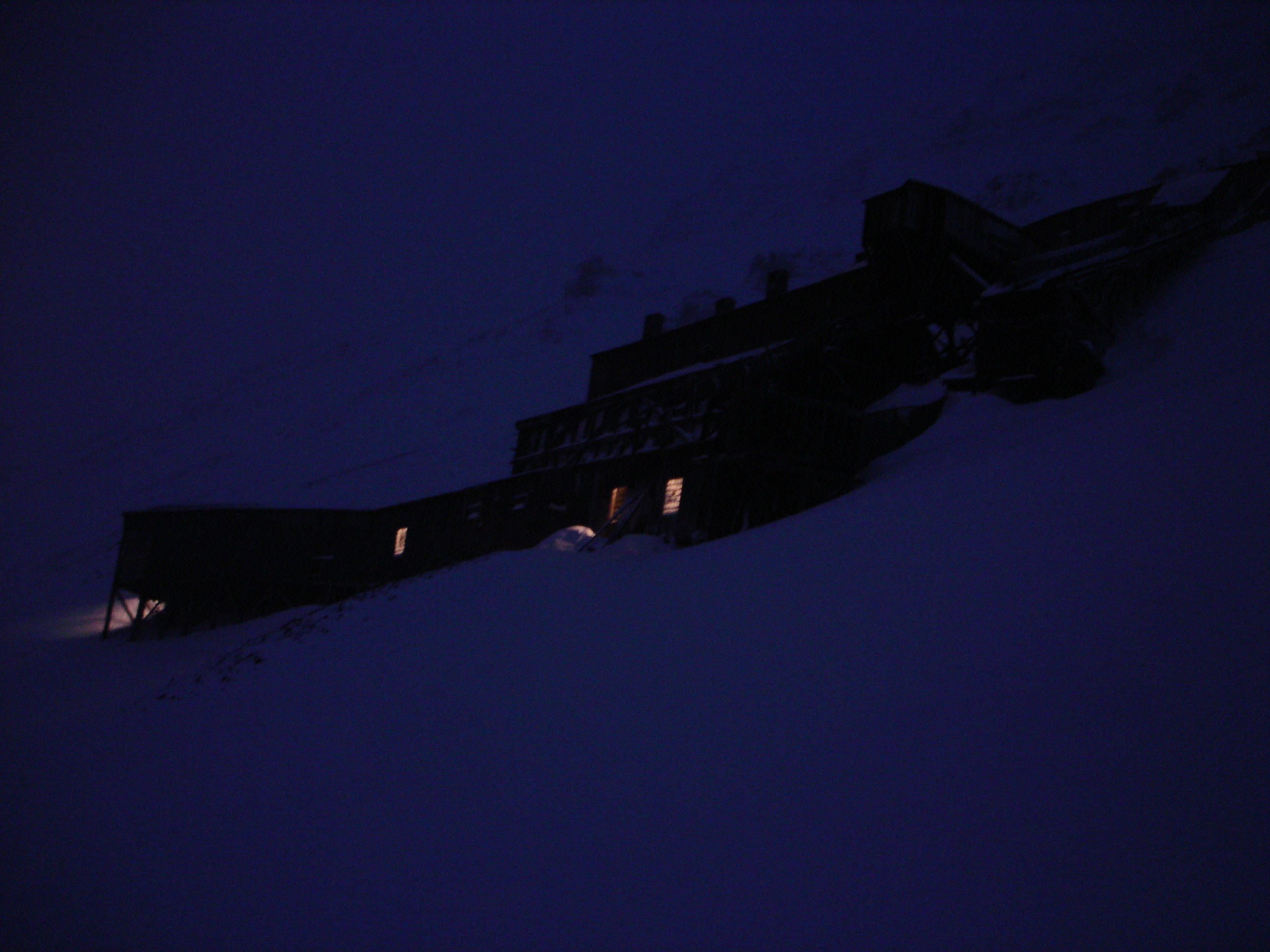
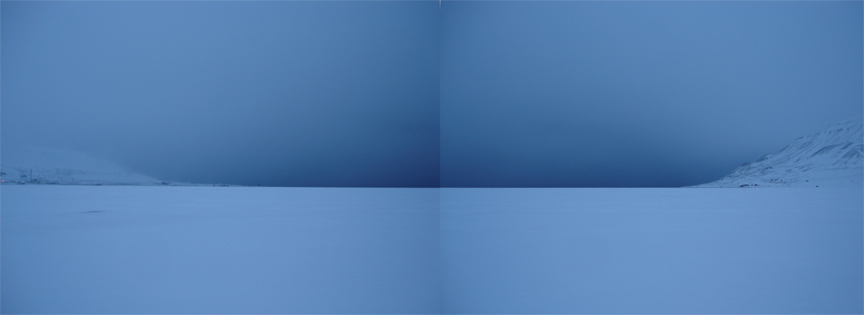

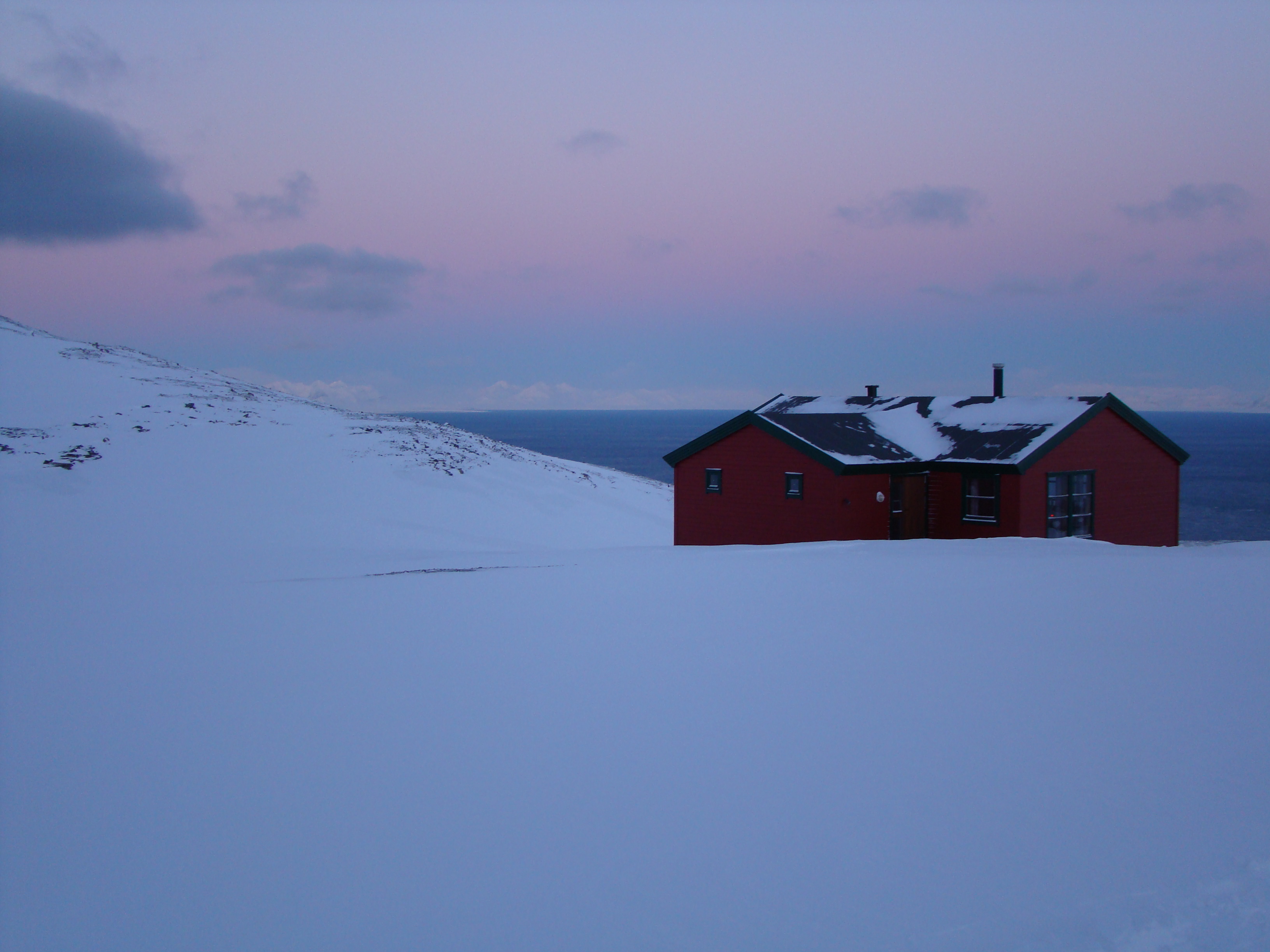

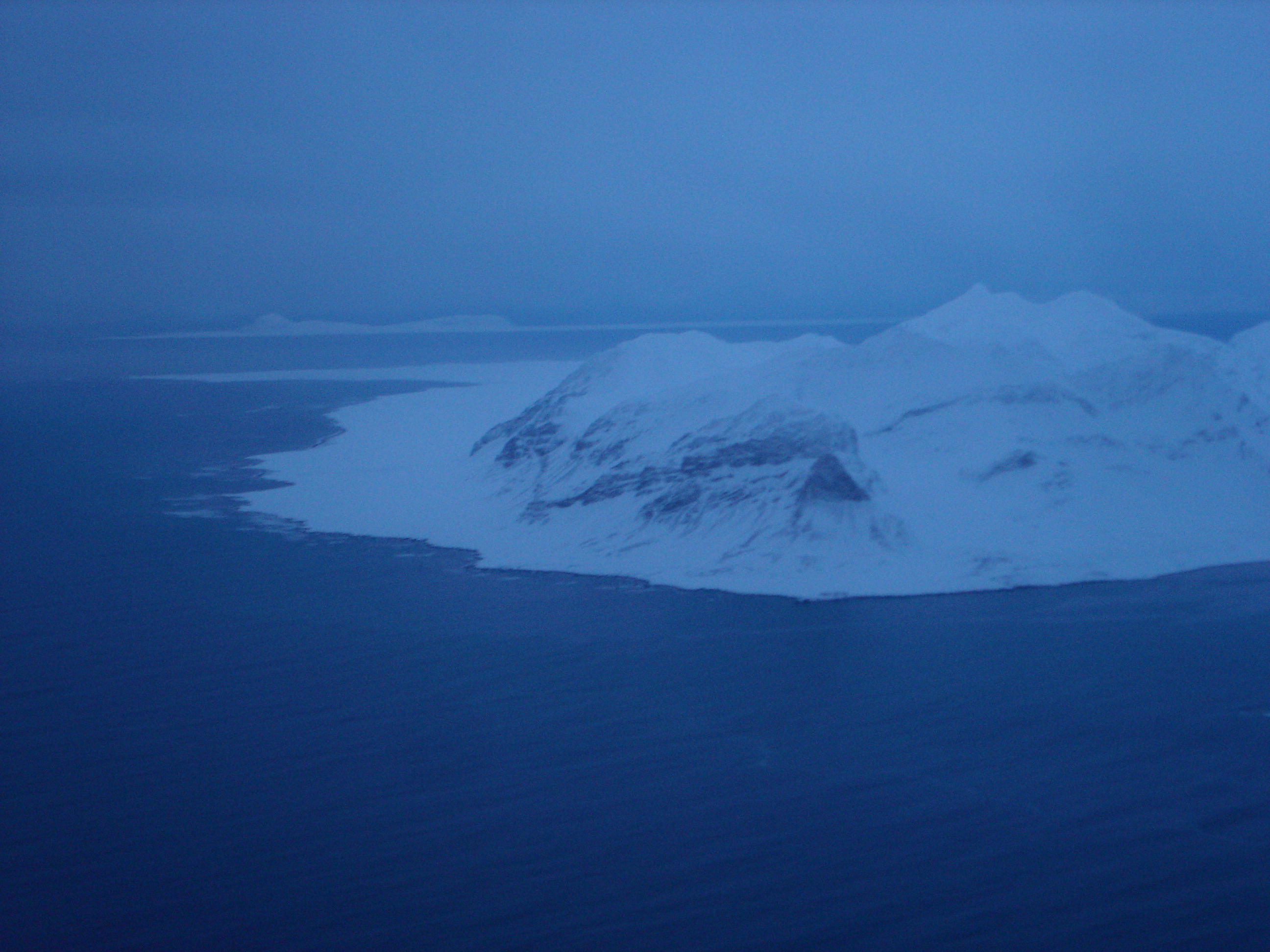
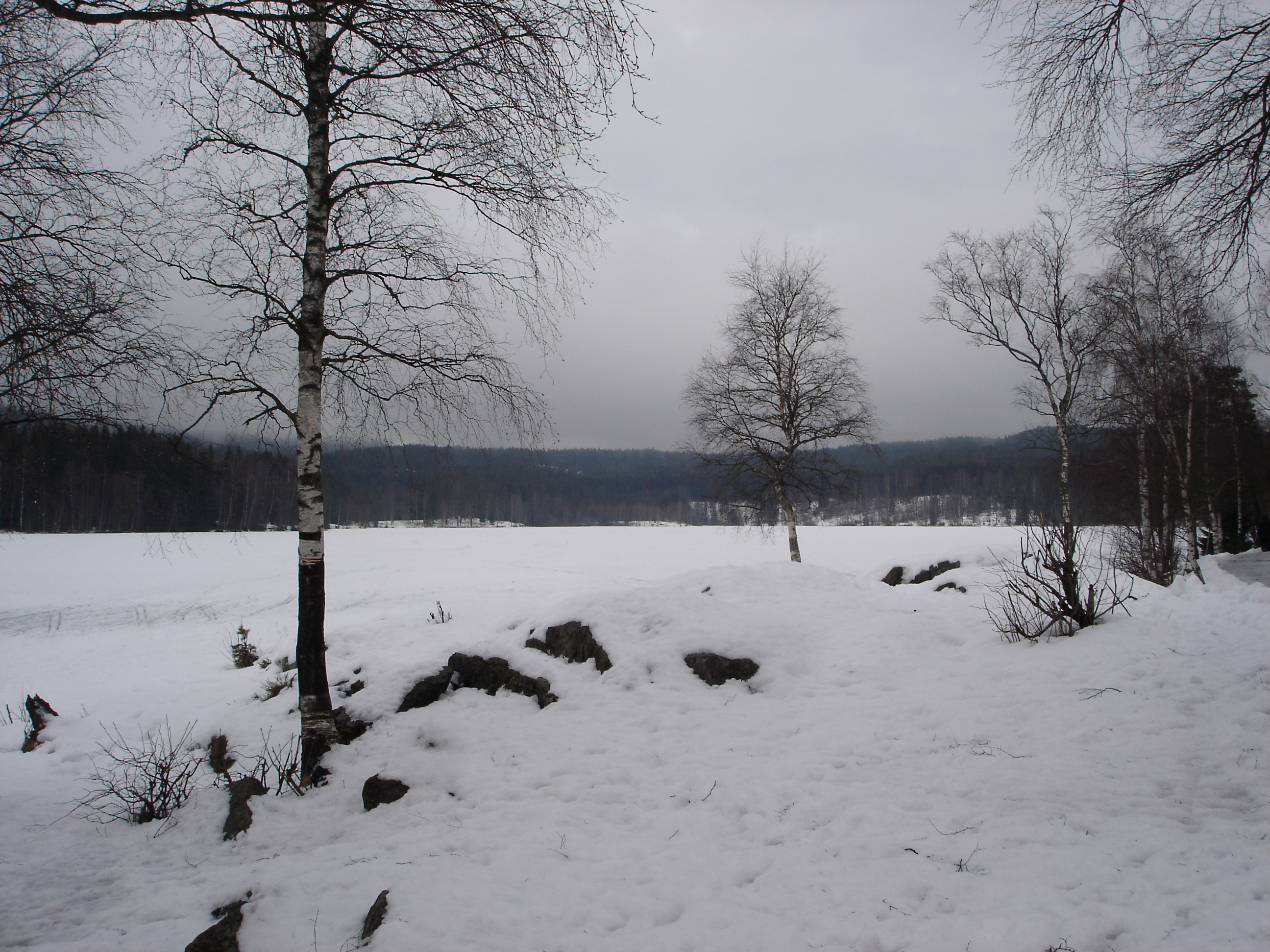
 how fortunate we were to see the city on such a clear day. It seemed a bit hazy to me, but overall the views were great and managed to snap a few photos of the countryside.