Notes from the Arctic

Explore, Discover, Inspire!

Wednesday, March 5, 2008

Expedition to Tunabreen

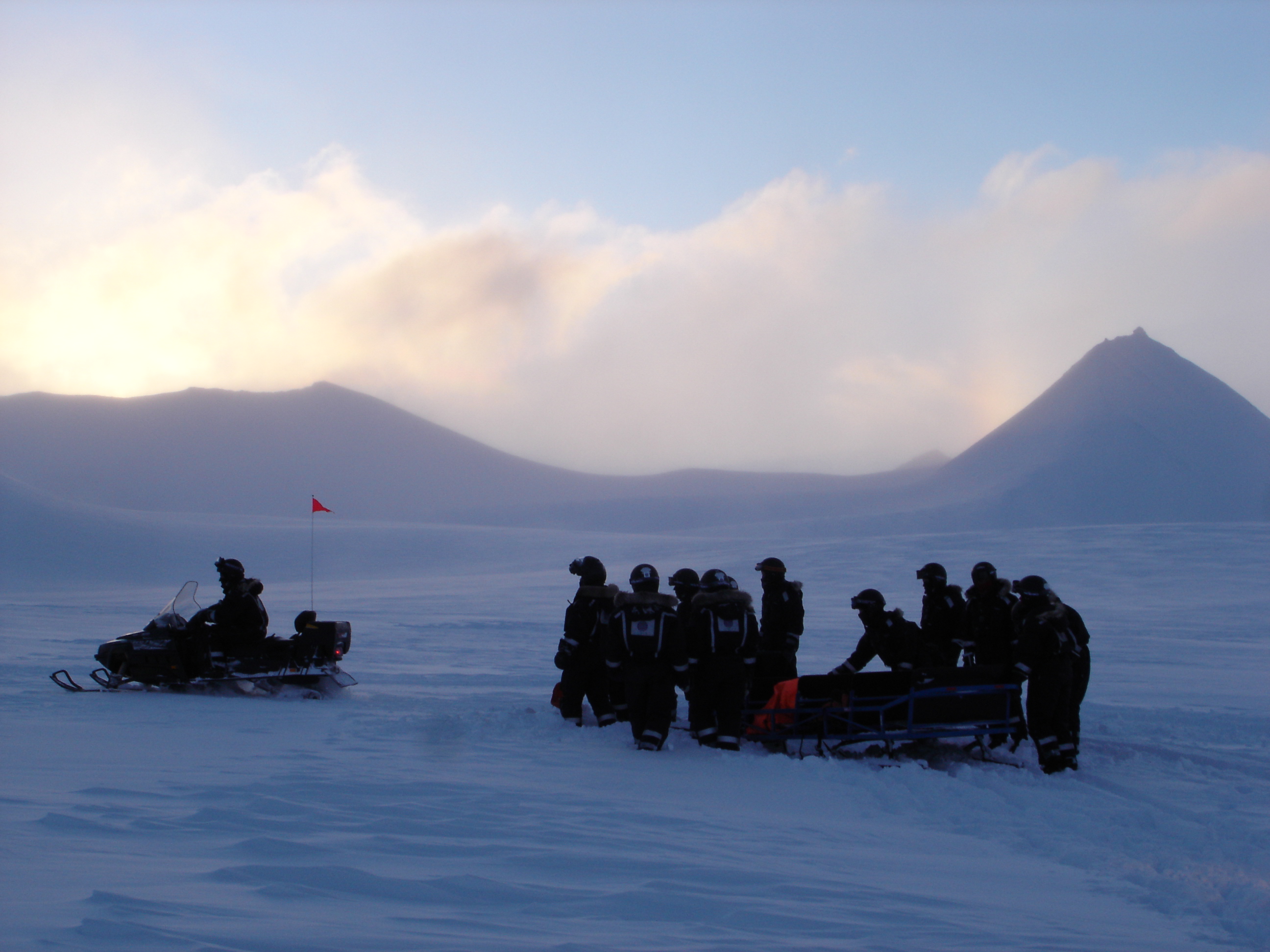
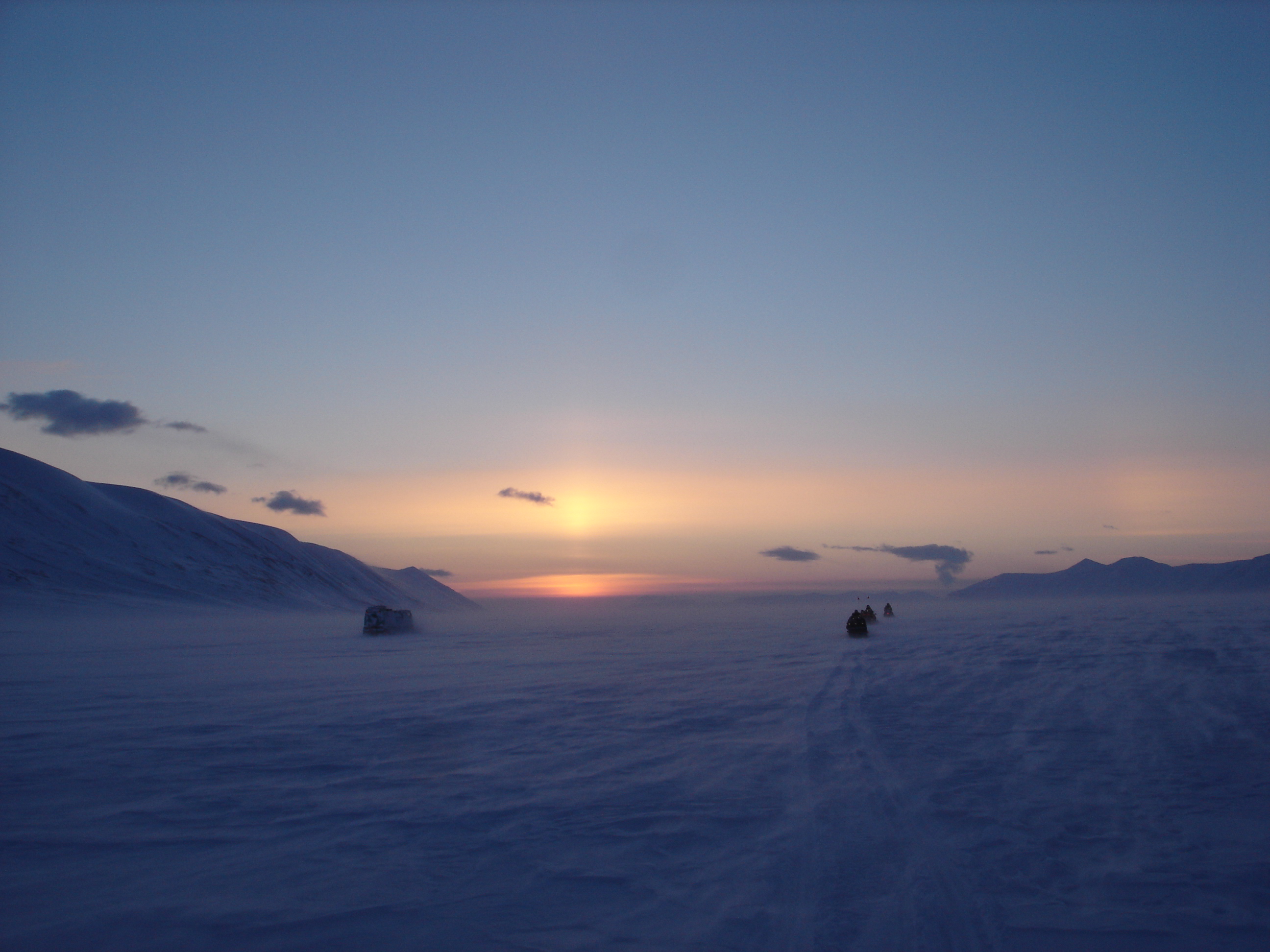
This morning the class met at UNIS at 9 am for an excursion to Tunabreen and Von Postbreen, two big glaciers that empty into Tempelfjorden, a fjord northeast of Longyearbyen. The weather in town was quite good, and it was the first time we were able to see direct sunshine at the logistics facility. We used the big Yeti scooters, and once again pulled sledges full of students and gear. Francesco, Alessio, and myself traveled together and the three of us shared driving duties. I drove first and took us up Adventdalen. Unfortunately, the weather changed early in the excursion, and we had near white-out conditions for the vast majority of the trip. It was very difficult at times to see the other scooters in front of us. We were traveling at about 40 km/hr, and I was usually 5-6 seconds behind the scooter in front of me. I had to speed up numerous times to be able to see the scooter I was following, otherwise I would lose sight of them completely. Meanwhile, I had to remember there were other scooters barreling up behind us...

Francesco took the reins in Sansdallen and drove us to Fredheim, a little hut on the edge of Tempelfjorden. We stopped there, had some lunch, and prepared to venture out across sea ice to the glaciers. This was the first time we were attempting to cross sea ice so it was quite a thrill. We prepared to depart Fredheim, pulled out our ice spikes, and hung them around our necks–standard protocol when crossing ice, in case we fall through and need to use them to claw out of the ice-cold water. The safety and logistics crew were confident from earlier observations that the ice would be thick enough, but we wanted to be prepared just in case. Just before we left, Monica, our leader on this trip said a chilling statement: "Make sure you keep enough distance between us in case I go under the ice so you don't fall in too..." !!

Alessio took over driving responsibilities in this portion of the trip, and Francesco and I sat in the sledge on an unforgettable ride across the sea ice to the glaciers. We were told to keep our speed high all the way to the glaciers in case of thin ice, so the ride was incredibly rough. Several times we'd fly out of our seats as we'd go over drifts and ice thrusts. Luckily, the weather cleared slightly, so the views improved as we approached our destination. I could see holes in the ice right next to us along the way, and I saw several seals out on the ice. In quite a few places, the tracks revealed that the scooters in front of us had zipped through areas of slush, which heightened tension during the journey. Water on top of the ice was not a welcome sight...

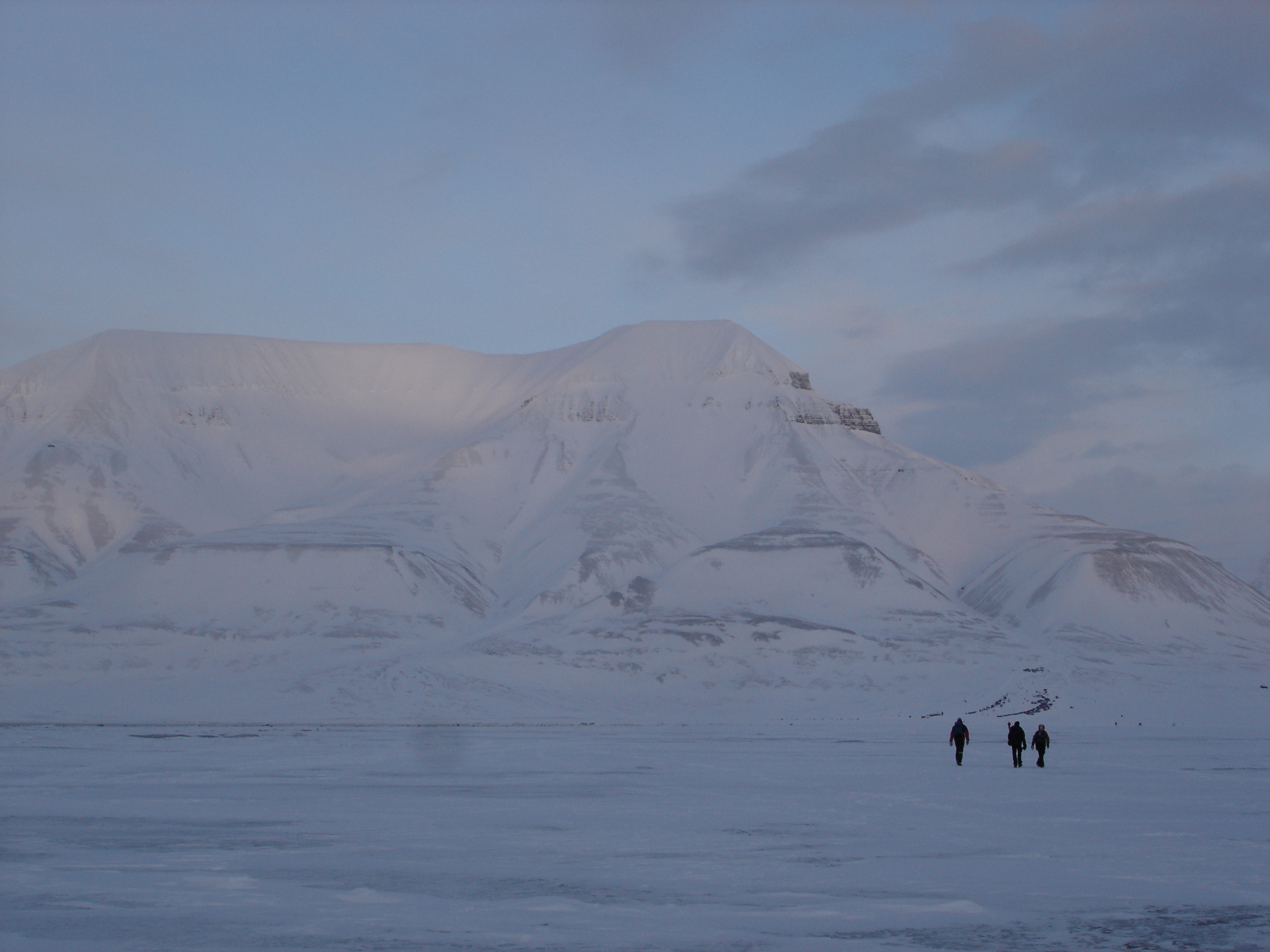
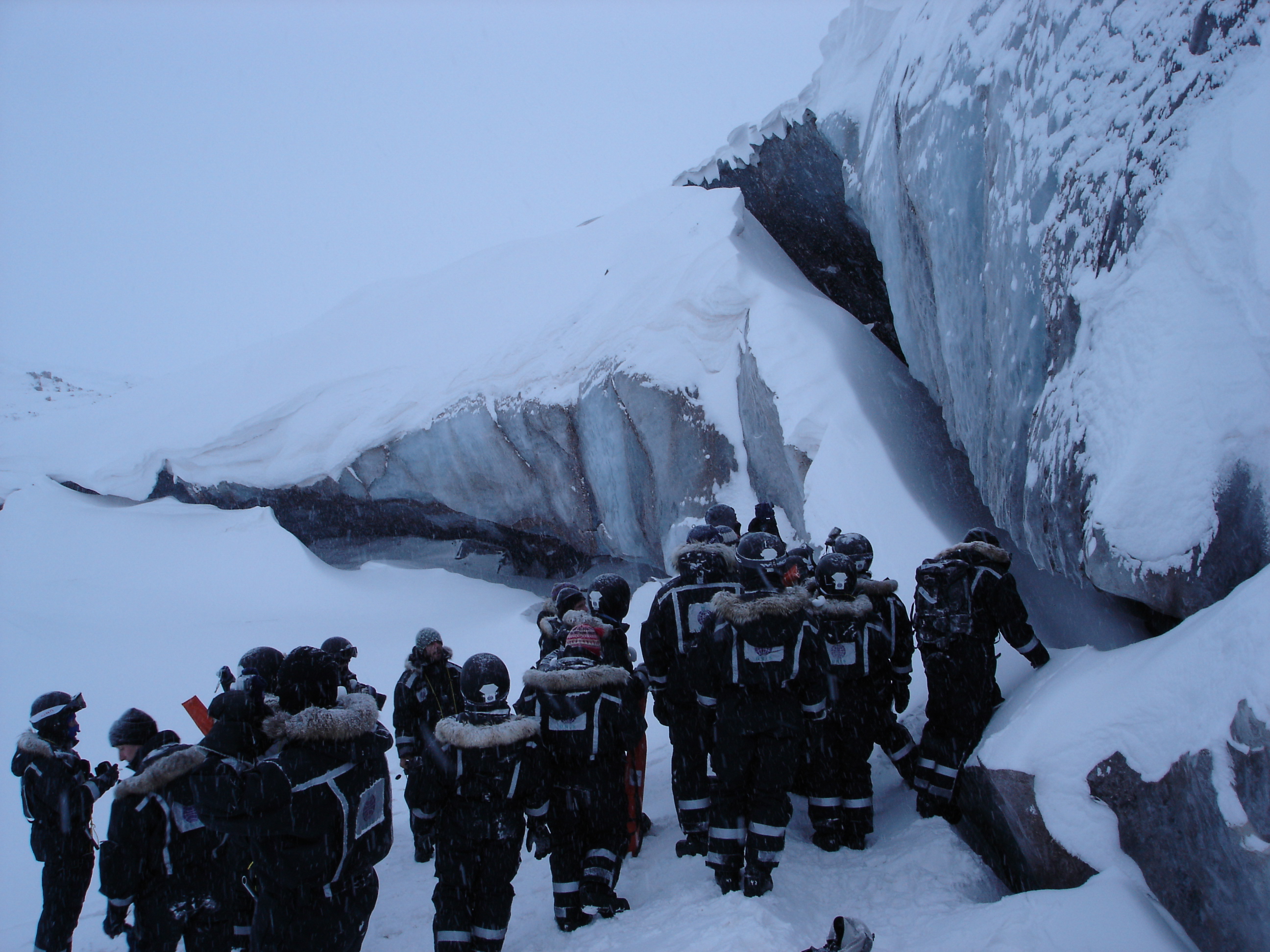
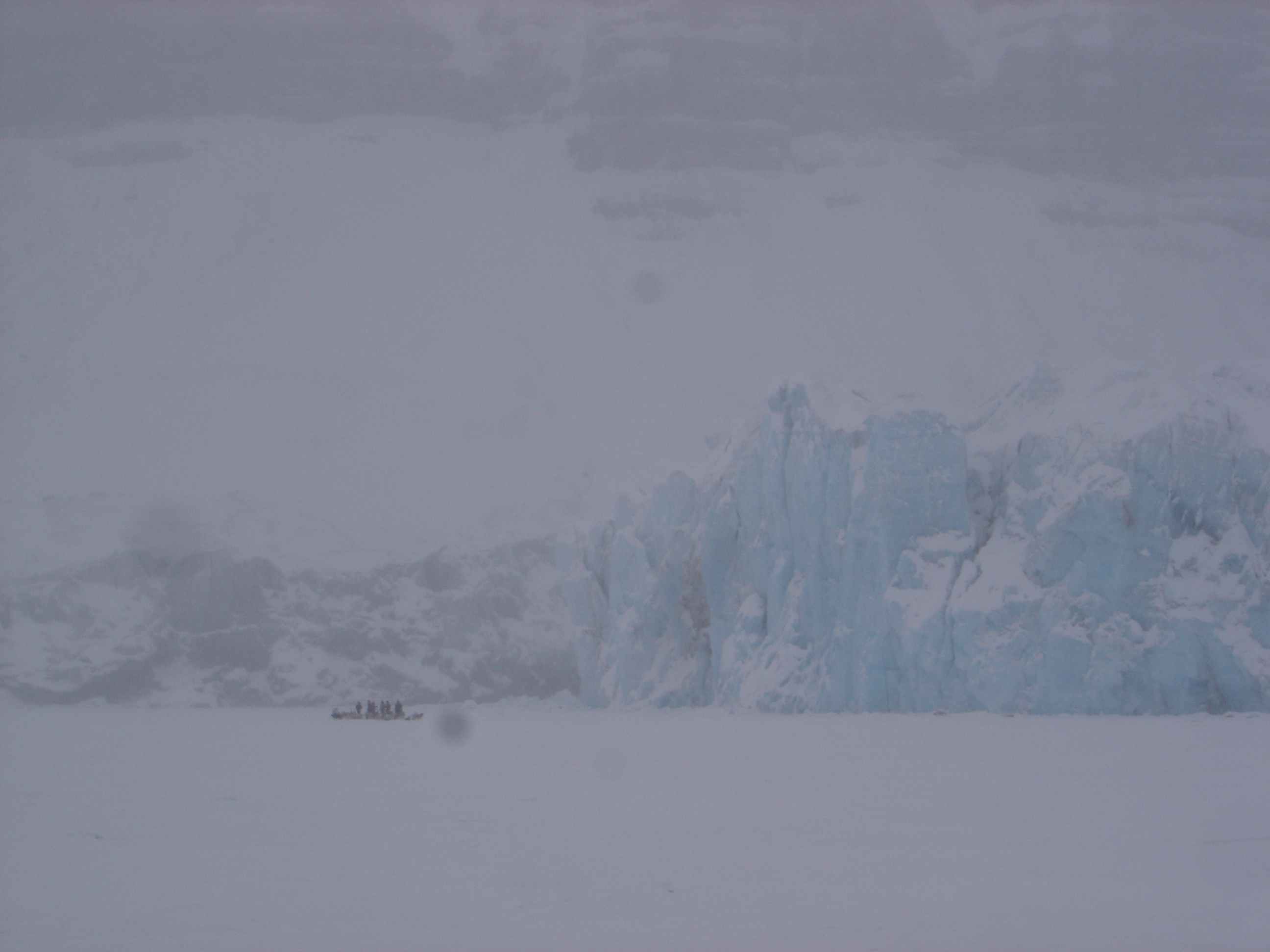
Finally, we could faintly see the terminus of the two huge glaciers coming into view through the blowing snow where they joined together in the fjord. It was a majestic sight, and the sheer size of them was totally captivating - the entire structure was probably 3 km wide. Tunabreen had a brilliant, deep blue color with streaks of debris, chaotic ridges and blocks, and a mantle of snow. It was clearly active, mangled with huge crevasses, and showed signs of recent calving (the process where ice breaks off and floats into the sea - icebergs!).



The other, Von Postbreen was very smooth, and appeared to be quiet, glaciologically speaking. This was an outstanding location to observe the differences in rivers of ice that were immediately adjacent to one another. We observed that Tunabreen had recently surged, and because Von Postbreen was in a quiescent period, were able to get up close and look closely at the ice.


While we were there, a group of dog sledges pulled up about 1 km away from us to observe the glacier as well. During moments of silence, we could clearly hear sounds of barking huskies, echoing off the face of the glacier. I took a full-zoom picture, look closely you should be able to seem them–and they were a long distance away from the glacier. It was a magical moment.
Tuesday, March 4, 2008

Modeling Ice

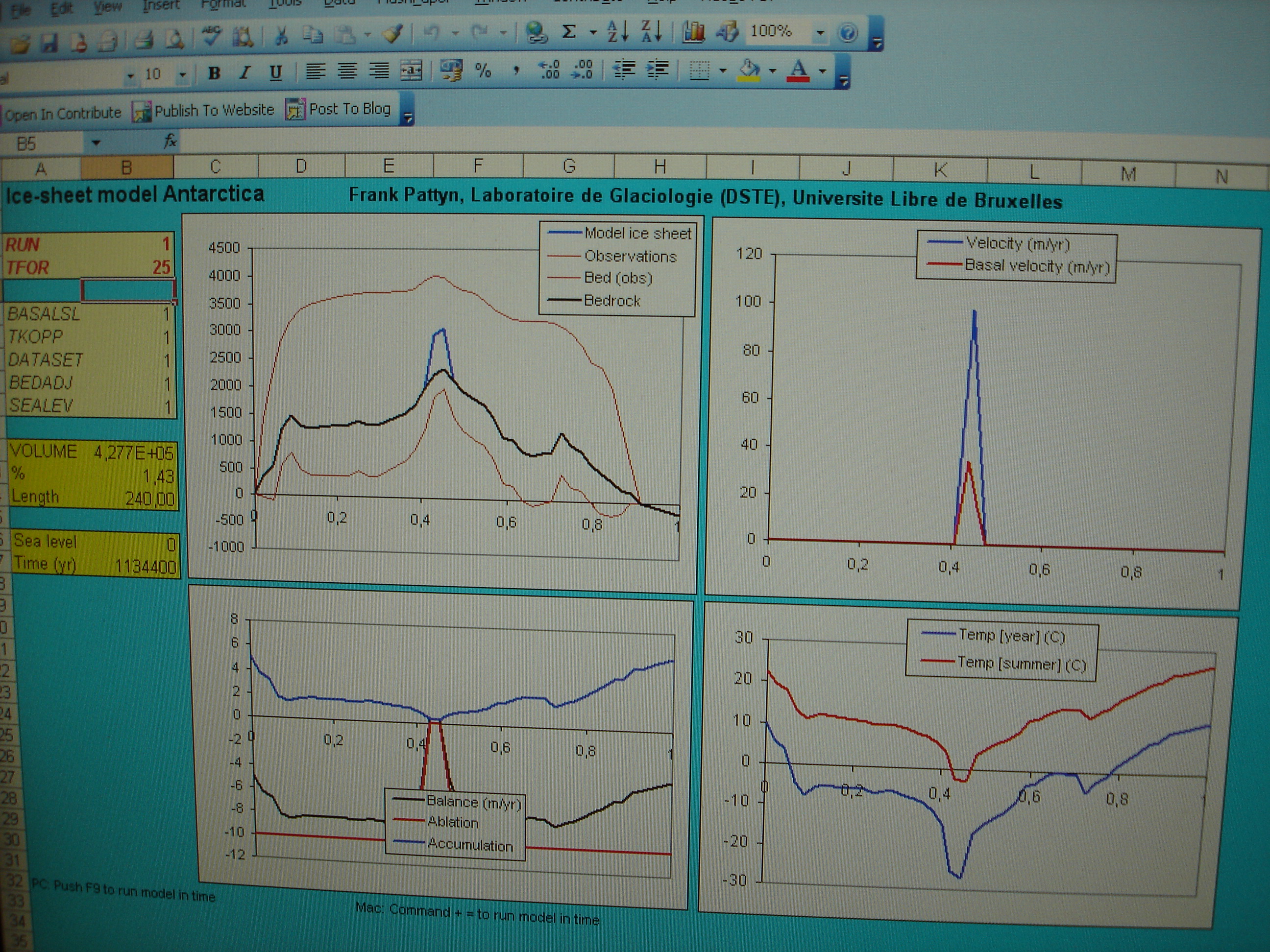
For the last two days, we've spend most of our time learning how to model ice sheets using spreadsheets and Matlab software. In glacier modelling, we use physics, math, and observational data to characterize, understand, and explain glacial dynamics. With lots of help from Ian and Nick, our lecturers for this week, we ran some models of the ice caps on Greenland and Antarctica to generate simulations that help us to visualize ice sheet formation and ablation over long periods of time. The models allowed us to change a variety of variables such as the temperature, basal drag (resistive sliding forces), and others; the model output included sliding velocity, ablation rates, accumulation rates, ice thickness, and even isostatic effects (how the formation of ice sheets and their weight can cause bedrock to sink into the Earth's crust). By using these techniques, we can make predictions of what may happen to the cryosphere in the future.

Update

Hi Everyone,

Sorry for the delays in the posts - I've been very busy, so my time has been limited. I will upload more images and stories soon.

Sunday, March 2, 2008

Tasjansen

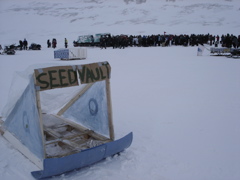
This morning, Anne and I decided to hike to an ice cave in nearby Larsbreen and try going inside, but found the entrance to be drifted over. We dug for a half hour through the hard wind-packed snow, but didn't have any luck. Afterward, Anne, Jakob, Max, and I walked to "Tasjansen," a home-made sledge race that takes place on Hiorthamnin (a slope across the fjord from Longyearbyen). Tasjansen is one of many events that takes place during Solfestuka, a week-long series of partying, music, and celebrations that welcome back the Sun. The event is a huge tradition here, and most of the town's people gather. During our walk, we luckily caught a ride aboard a bus on sledges that was towed by an enormous track -type vehicle. It was warm inside and someone was playing an accordion. If you look closely in the picture below, you can see a huge number of scooters and people on the mountain...


Students from our brakke made a sledge that looked like the Seed Vault, and I must say, performed quite well on its trip down the slope!

Saturday, March 1, 2008

Frostbite and Icy Streets

Today I rested - I needed a break and man did it feel good to sleep in and get a little work done in the afternoon. Its amazing how fast time flies here. Several others went out on very long ski trips and hikes; they came back with great stories...and some with frostbite on their fingers and noses.

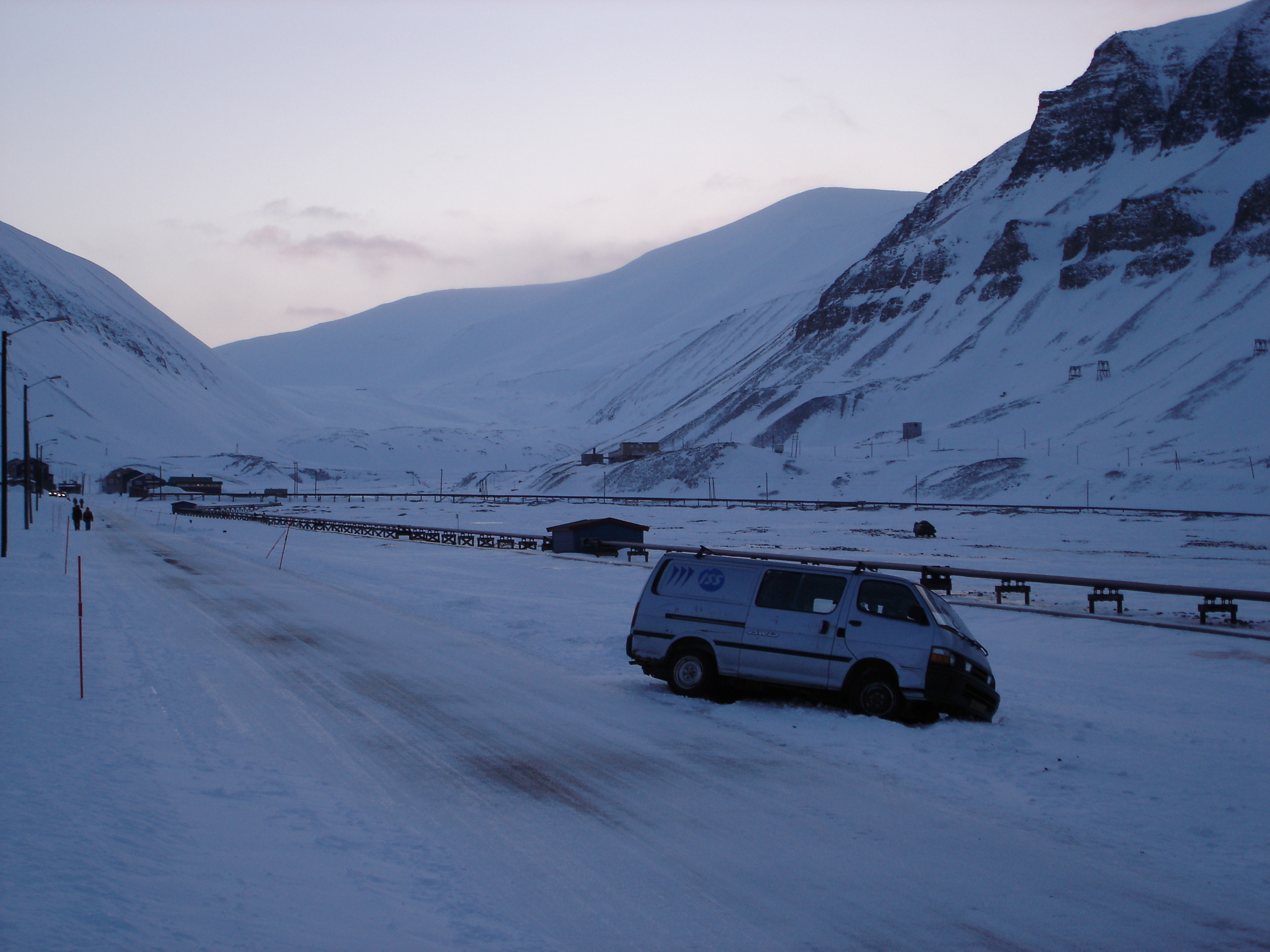
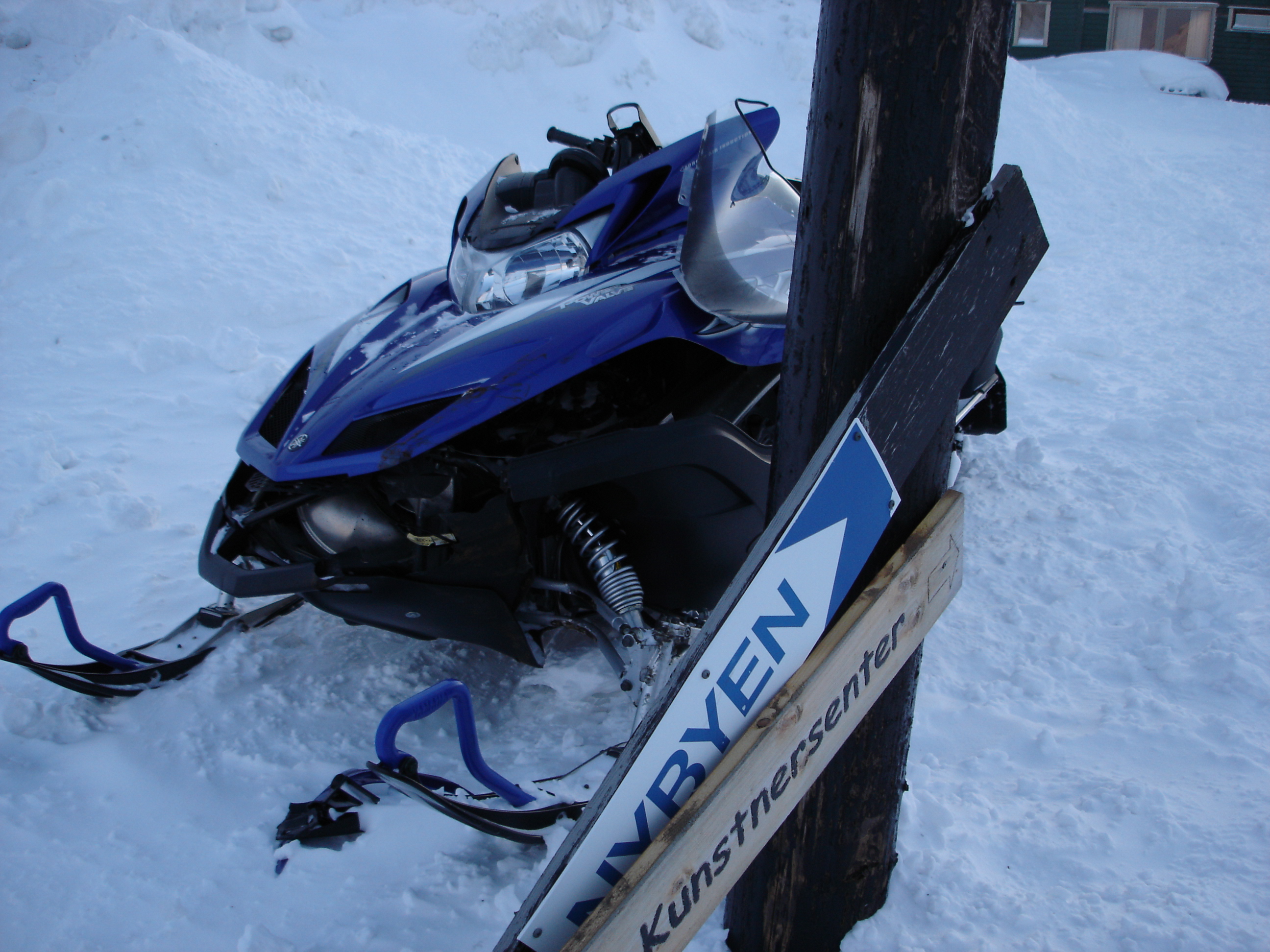
During my walk into town today, I came across a couple of examples that show how traveling by car or scooter in Longyearbyen is not without risk...


This scooter slammed right into the Nybyen sign!

Friday, February 29, 2008

Leap Year in Svalbard

Time is flying by - Today marks the end of week 2 of my stay in Svalbard. The days are getting much longer, 20 minutes each day. I gave a presentation to the class on ice distribution in the solar system, which included images from spacecraft that show ice-rich surface features of Mars, and the moons of Jupiter, Saturn, Uranus, and Neptune.

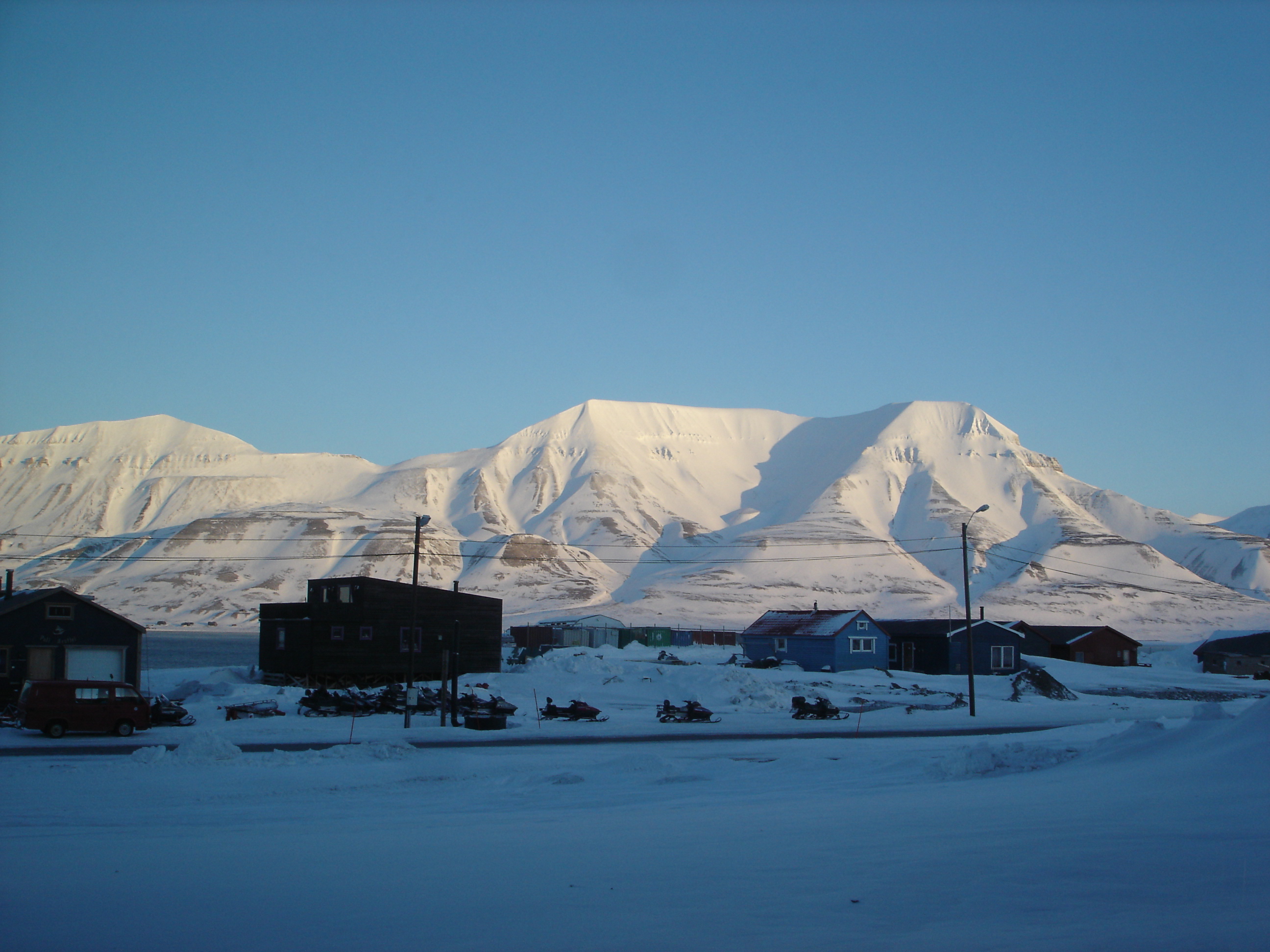
Today was very clear, and the views were outstanding. A group is planning on climbing the mountain in this picture tomorrow.

Wednesday, February 27, 2008

Epic Journey Through Reindalen

Days like today are those that I will always remember vividly, for the rest of my life. On today's excursion, the class departed UNIS around 10 am on what ended up to be a 125 km journey that lasted 9 hours. The weather was very good, but cold. I got to drive again, and was the only person besides Doug who drove all day and stayed outside the entire day. Most everyone else rotated from the sledges/scooters to the bandwagon or vice versa. Riding the scooters is warmer than being on the sledge because they have hand warmers and you are closer to the heat of the engine which may only be sensible with your feet, but that didn't stop some who were driving from getting cold. We traveled an average of 20 km per hour but sometimes much faster, for good reason. I welcomed the responsibility of pulling a sledge of 4 students and our gear - its awesome experience.


We stopped at the base of Drønbreen, a recently surging glacier to discuss and observe its terminus features. After some lunch and a lot of ooohs and aaahhhs about how striking the landscape was, we proceeded to drive up the glacier. The slope seemed steep and we moved from plateau to plateau on the glacier, traveling very very fast uphill over rough deep snow. I maneuvered the scooter swiftly, shifting my weight side to side when necessary and slamming on the gas at the right times...I recall it being so surreal it was like a video game, seeing 80 or 90 km/hour during some of the most exhilarating moments...bear in mind the speed is required to navigate over deep snow, for if we did not achieve a critical velocity, we'd get stuck...and two scooters did get stuck. After a lot of work they were free. Luckily I was able to read the terrain pretty well and avoided getting stuck twice by stopping, unloading the sledge and proceeding with a lighter load in sketchy terrain.


As we approached the
Drønbreen-Tellbreen pass, it was clear that the scooters were not going to be able to make the drive loaded–there was just too much weight and too much deep snow. We decided to unload everything and ferry the students over the pass to the top in the bandwagon. After the students were all taken up to the top, the remaining scooters pulling the empty sledges made their attempt. One by one, we started up the glacier. At one point, I was by myself, and would be the last one to make the attempt up Drønbreen to the pass. I started slowly and gradually increased my velocity until that Yeti was wide open. Roaring up a river of ice, mountains moving quickly by, I raced toward what I hoped would be a sunlit pass with my sledge bouncing behind me. I didn't know what lay ahead of me but I stayed focused. The scooters were disappearing one by one over the glacier, its horizon curving away and out of site. Closer and closer, brighter and brighter. I started to squeal. My view in front of me widened and lengthen tremendously as I rapidly approached the top–I started laughing because I was about to pass into direct sunlight, my first since I arrived in Svalbard. I stopped at the top; all had finally arrived. There was a celebration, dancing, and exhaustive play in the snow. I dropped down and made a snow angle myself. Nothing but smiles all around.


We proceeded on the next leg and longest part of the journey over Tellbreen and stopped at its terminus for discussion and observation. We continued down Reindalen, a massive valley with mountains on either side. As the name implies, it was loaded with scores of reindeer, some perched on extremely windy knolls, while others were grazing and roaming about. The wind was quite strong, but we were moving with it for several couple hours, traveling around 20 km/hour. Very few people have been in this area, and only this time of year once can actually access it by scooter. Along the way, we stopped at a pingo. These strange, large upwellings of ice-rich rocks and permafrost have been forced upward by subsurface hydrostatic pressure. These are interesting features that are found throughout the Arctic and Antarctica. The remainder of the journey found us zipping down Reindalen into the sunset. The imagery I saw during this section of the journey left me speechless.