Modeling Ice
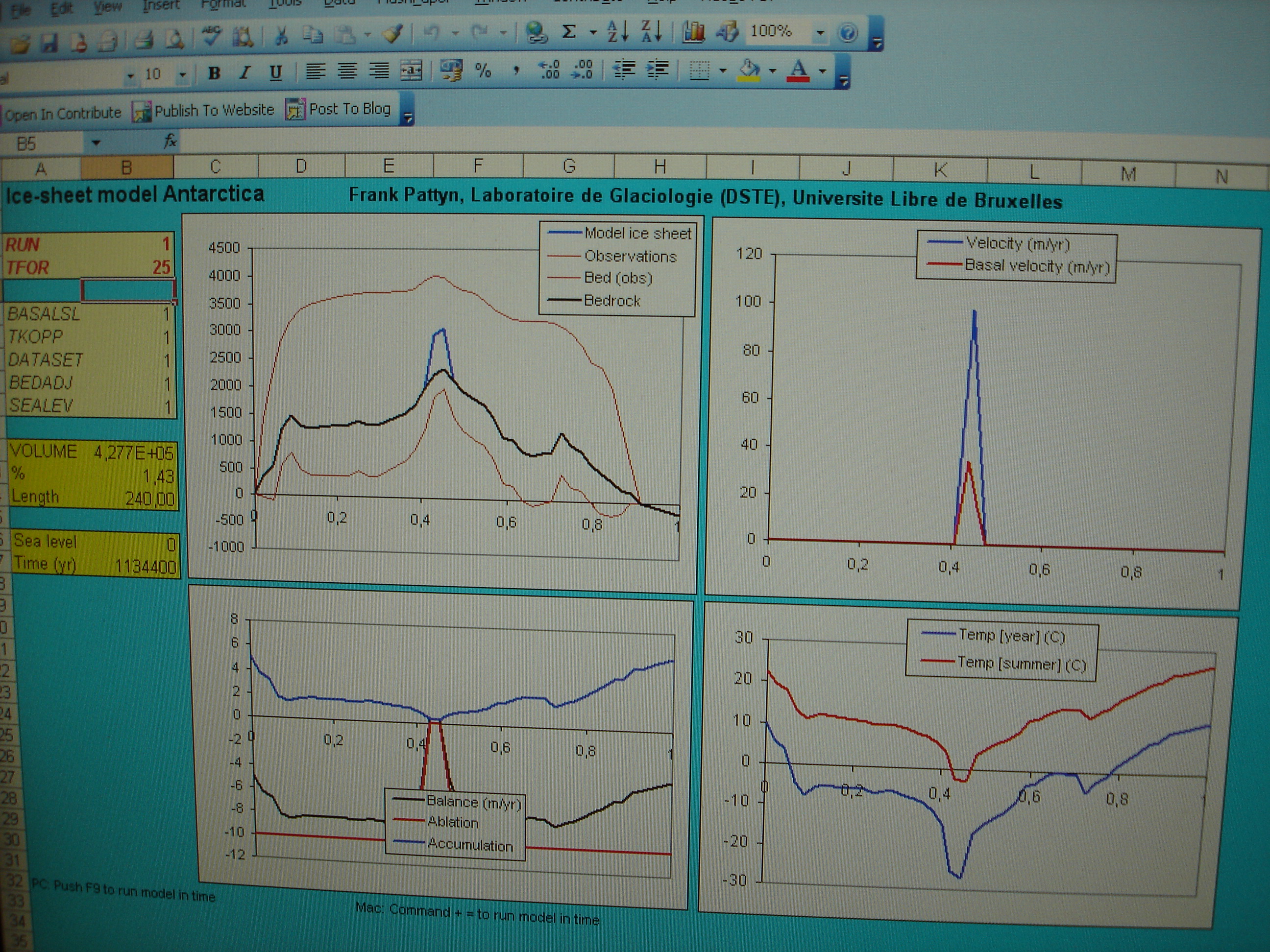
For the last two days, we've spend most of our time learning how to model ice sheets using spreadsheets and Matlab software. In glacier modelling, we use physics, math, and observational data to characterize, understand, and explain glacial dynamics. With lots of help from Ian and Nick, our lecturers for this week, we ran some models of the ice caps on Greenland and Antarctica to generate simulations that help us to visualize ice sheet formation and ablation over long periods of time. The models allowed us to change a variety of variables such as the temperature, basal drag (resistive sliding forces), and others; the model output included sliding velocity, ablation rates, accumulation rates, ice thickness, and even isostatic effects (how the formation of ice sheets and their weight can cause bedrock to sink into the Earth's crust). By using these techniques, we can make predictions of what may happen to the cryosphere in the future.

posted by Jon Rask @ 11:45 PM


1 Comments:
John,
Looks to be a bit colder than ND but way cooler in terms of the knowledge you are picking up. So, you know how some places around ND put like rocks up in the hills indicating the town or the graduating class...do they, where you are, drink a lot and then go mark the hills with yellow letters? HA. Now that would be funny!
Troy G. / ND
Post a Comment
<< Home